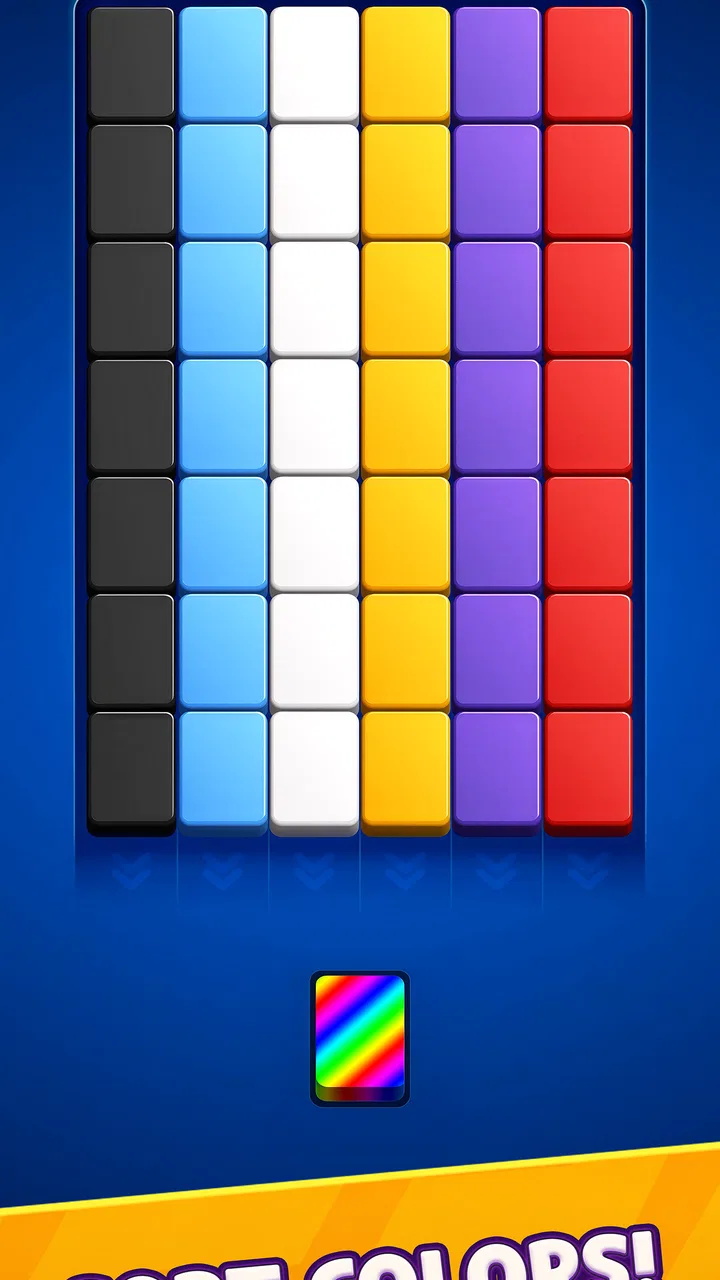
Stack Sort: Color Puzzle
- 4.6
- Rating
- 500.00K
- Installs
- Free
- Price

 Analysis by App-foxy
I approached Stack Sort: Color Puzzle expecting a light color-matching game, but its appeal became clearer after a few rounds. The basic idea is easy to understand: cards are arranged by color, some tiles are hidden, and each move is meant to bring the board closer to a clean solution. That simplicity makes it approachable, yet the hidden information gives each puzzle a small layer of tension. I am not just sorting what I can see; I am also deciding when to expose something new and when to protect a useful arrangement.
This is a free puzzle game from Panteon, listed for Everyone and available on Android devices running version 7.1 or later. Its average rating is 4.6 from around five thousand ratings, and it has passed five hundred thousand installs. Those figures suggest that the format has found a broad audience, but the more important question is whether it suits the way you like to play. In my experience, it works best as a short, focused distraction rather than as a deep strategy game with a large world to explore.
Getting started without feeling lost
I find the easiest way to settle into this puzzle is to treat the first board as a chance to learn its visual logic, not as a test of speed. A quick scan before moving helps me notice which choices keep the layout flexible, especially when a tile is still concealed. Once that habit feels natural, the next section looks at how to make each short session feel clear and satisfying.
You May Also Like

 Blood Strike: 2.5 Anniversary
Blood Strike’s Loadouts Turn Every Drop Into a Tactical Gamble
A close look at Blood Strike’s custom loadouts: how fast access to signature weapons reshapes its battle royale rhythm, rewards preparation, and narrows the gap between fights.

 Pandora - Music & Podcasts
Pandora’s Music Is Easy to Start, but Harder to Recover
Pandora’s strength is its low-effort path from a seed to a station. Its weak spot is how much confidence it asks you to place in connection, setup, and quiet recovery.

 8 Ball Pool
 Is Built on Rivalries, Rematches, and Routine
A close look at the rivalries, rematches, shared routines, and unanswered safety questions that turn a quick pool match into a persistent mobile community.

 Samsung Music
’s Quiet Strength Is Playing What You Already Own
Its reach comes less from spectacle than from dependable access to a personal library. That simplicity is both the app’s strongest retention engine and its ceiling.

 AccuWeather: Weather Radar
AccuWeather Review: A Quick, Clear Forecast for Everyday Decisions
For everyday plans, the best forecast is the one you can understand quickly. AccuWeather makes rain timing, radar, and local conditions easy to act on, with a few trade-offs.

 Hill Climb Racing
Why Hill Climb Racing Still Turns Crashes Into One More Run
A tiny car, a bumpy hill and one more upgrade: Hill Climb Racing keeps resurfacing because its simple chaos makes every near-miss feel personal.
More From Our News Desk



What the first launch tells you
The first thing I would tell a new player is not to overthink the rules before touching the board. The game’s short store description is “Stack Sort,” and that is a useful hint about its rhythm: examine the visible colors, make a sensible placement, and watch the layout become easier to read. The opening experience is designed around immediate interaction rather than a long explanation, so the fastest way to understand it is to try a move and observe how the board changes.
You do not need prior experience with sorting puzzles. If you have played color-matching games, you will recognize the satisfaction of grouping similar pieces. If you have mainly played casual games with timers, characters, or elaborate objectives, the quieter presentation may feel unusual at first. There is no need to learn a complicated control scheme. The challenge comes from choosing an order, not from mastering rapid taps.
Before starting, I recommend setting aside a few uninterrupted minutes. A single puzzle can look obvious when you first open it, then become less clear once hidden tiles begin affecting your choices. This is not a game that demands a long session, but it rewards giving the board your full attention for a moment. Playing while rushing between tasks can make a solvable arrangement seem harder than it really is.
The first meaningful action
My preferred opening habit is to scan the entire board before making the first move. I look for colors that already have a natural place and for stacks that could reveal information without damaging a nearly complete group. That small pause is more useful than tapping immediately. The first successful action is not simply putting a card beside a matching color; it is making a move that improves the board while preserving future options.
For a first-time player, a good practical sequence is to identify the clearest color relationship, move only what is necessary, and then stop to reassess. Do not assume that the most visible match is automatically the best one. A move can appear productive while blocking a route to a hidden tile or leaving an awkward gap that will be difficult to resolve later. The game becomes more enjoyable when you treat each action as part of a chain rather than as an isolated match.
When a hidden tile is revealed, I suggest resisting the urge to react instantly. Take a second to compare the new color with the groups already forming. Sometimes the discovery confirms your plan; sometimes it means your original arrangement should be changed. That moment is where the puzzle differs from a purely open sorting board. The hidden information keeps the solution from being completely obvious from the start.
How to read a board before it becomes complicated
I found it helpful to divide the board mentally into three kinds of material: colors that can be placed now, colors that are useful as temporary support, and tiles that should remain untouched until more information is available. This is not a formal game mode or a special feature; it is simply a way to avoid wasting moves. The distinction matters because a visually tidy stack is not always the most flexible stack.
When several colors seem equally safe, I usually work with the one that opens the most possibilities. A move that exposes another tile may be more valuable than one that completes a small group immediately. This is one of the game’s less obvious lessons. Completion feels rewarding, but information can be more important than visible progress during the early part of a puzzle.
Another useful habit is to remember where a color was blocked, even if the board looks busy. Once the layout changes, that remembered location can help you avoid repeatedly examining the same dead end. I would not write anything down for normal play, but keeping a simple mental picture of the troublesome areas makes later decisions faster and reduces random tapping.
Where new players commonly hesitate
The main source of confusion is the relationship between sorting and revealing. A player may think the goal is only to place identical colors together, then wonder why a seemingly correct move creates a less convenient position. The reason is that the board is also asking you to manage visibility. A hidden tile can change the value of the spaces around it, so the best move is sometimes the one that looks less complete in the short term.
Another uncertainty is whether every move should improve the appearance of the board. I learned not to judge progress only by how neat the colors look. A temporary rearrangement can be worthwhile if it gives access to a more useful section or keeps a needed position open. The game does not always reward the prettiest immediate layout; it rewards a sequence that leaves enough room to finish.
If you reach a point where nothing seems to fit, I would first review the last few moves instead of assuming the puzzle is impossible. Look for a stack that was closed too early or a color that was placed in a convenient-looking position but is now blocking access. This kind of review is more productive than tapping through every available option. It also turns a failed attempt into a lesson about how the board’s hidden structure works.
Free access and the practical trade-off
The game is free to download, which makes it easy to try without committing money at the beginning. It does include in-app purchases ranging from $0.99 to $119.99 per item. That is a wide range, so I would advise new players to treat purchases as optional decisions rather than part of the basic entry point. If you are comfortable playing casually and stopping when you have had enough, the free starting point is the most sensible way to judge whether the puzzle style suits you.
I also recommend checking the purchase flow carefully before confirming anything, especially if a child is using the device. The Everyone rating makes the game broadly accessible, but an age rating does not remove the need for sensible purchase controls. For me, the important distinction is that the puzzle itself is easy to sample, while spending decisions should be made separately and deliberately.
When it fits into an ordinary day
A realistic use case is a short break after finishing a task. I might open it while waiting for an appointment, play through a board during a coffee break, and close it once I feel my attention returning. The color-based format makes it easier to resume mentally than a story-heavy game, because I can focus on the current arrangement rather than remembering characters or plot details.
It can also work for someone who wants a calm activity before bed, provided that sorting puzzles do not make you more alert. The lack of a complicated control system is convenient when you want something immediately understandable. On the other hand, if you need a game that provides constant novelty, social interaction, or a strong sense of progression, this may feel too narrow. Its strength is concentration in a small package, not variety across many different types of play.
How it compares with familiar puzzle alternatives
Compared with match-three games, Stack Sort: Color Puzzle feels more deliberate. Match-three play usually emphasizes quick pattern recognition and chain reactions, while this game asks me to think about order, space, and what may be concealed. There is less emphasis on speed and more on avoiding a poor arrangement. Players who enjoy planning several moves ahead may prefer this approach.
Compared with classic open sorting puzzles, the hidden tiles give it a more uncertain flow. In a fully visible color-sorting board, I can often map the entire solution before starting. Here, the board can require adjustment as new information appears. That makes it more forgiving for players who like discovery, but potentially more frustrating for anyone who wants a completely transparent logic problem with a guaranteed plan visible from the outset.
It is also different from word puzzles or number games because the feedback is mainly spatial and visual. If you naturally notice color relationships, the rules should feel comfortable. If you prefer clues, equations, or written objectives, the experience may seem limited. I would choose this game for a quick visual sorting challenge, not as a replacement for a broad puzzle collection.
Using the next attempt more intelligently
After completing a puzzle, or after getting stuck, I would not immediately repeat the same pattern of moves. Instead, I would ask which decision caused the board to become restrictive. Was a matching group closed before its surrounding tiles were understood? Did I use a useful space too early? Did I ignore a move that revealed information because it did not look like progress? These questions make the next attempt more purposeful.
One of my favorite practical approaches is to prioritize flexibility over appearance. Keep an accessible position available when several colors are competing for it, and avoid committing a group simply because it can be completed now. This is especially useful when the board contains hidden tiles, since the unknown color may need a particular route later. The trade-off is that the board may look messier for longer, but the final solution is often easier to reach.
I would also recommend changing your pace depending on the board. Early moves deserve careful inspection because they shape the available space. Later moves can be faster once the hidden information has been exposed and the remaining colors are easier to track. Treating every move with the same level of caution can make the game feel slower than it needs to be, while rushing the opening can create avoidable problems.
Who should try it, and who should skip it
I think this is a good choice for first-time puzzle players, fans of color organization, and anyone who enjoys short sessions with a clear objective. It is approachable enough to start without a tutorial-heavy learning period, yet the hidden tiles give experienced players something to consider beyond simple matching. The free price also makes trying it straightforward, while the Everyone rating suits a broad range of players.
I would be more cautious about recommending it to someone who wants a large campaign, character development, competitive rankings, or a story. The premise stays focused on sorting and clearing boards, so its appeal depends on whether that core action remains satisfying for you. Players who dislike restarting after a poor sequence may also prefer a fully visible logic game where every consequence can be planned in advance.
The current version is 1.037, and the game supports Android 7.1 and later. Those details matter if you are using an older device, because compatibility is worth checking before expecting it to run. For most people considering a casual install, the more important practical question is whether they enjoy visual deduction and patient rearrangement.
My recommendation after playing
Stack Sort: Color Puzzle succeeds because it keeps the entry point simple while adding uncertainty through hidden tiles. I like that the first useful skill is not fast tapping but learning to preserve options. The game can provide a satisfying pause in an ordinary day, especially when I want a puzzle that begins immediately and does not require a long explanation.
Its limitations are just as clear. The focused format will not satisfy everyone, and the broad range of optional purchase prices means I would approach spending carefully. It is also less suitable for players who need constant changes of theme or a strong long-term narrative. Those are not flaws to ignore; they define the kind of player who will enjoy it.
For a newcomer, my advice is simple: scan before moving, use reveals as information rather than surprises, and do not confuse a tidy-looking board with a winning position. Give the free version a fair trial over several short sessions. If you enjoy deciding which color to expose and which space to keep open, this is an easy recommendation. Its best quality is the way a very small rule set can turn one ordinary sorting move into a genuinely thoughtful choice.
FAQs for Stack Sort: Color Puzzle
01What is Stack Sort: Color Puzzle, and how is it played?
Stack Sort: Color Puzzle is a casual sorting game based on organizing colored pieces into matching stacks. You move items between containers, usually following rules such as placing identical colors together or moving only the top piece. Each level becomes more challenging as the number of colors, stacks, and possible moves increases, encouraging careful planning rather than fast reactions.
02Is Stack Sort: Color Puzzle easy for beginners to learn?
Yes. The basic controls are simple and can generally be understood after playing a few introductory levels. You tap or drag a stack to select it and then choose a destination stack for the available piece or group. Although the early stages are relaxing, later puzzles require players to think several moves ahead and avoid blocking useful colors.
03Does Stack Sort: Color Puzzle require an internet connection?
The core sorting puzzles can usually be played without a constant internet connection, which makes the game suitable for short sessions while traveling or when mobile data is unavailable. However, internet access may still be needed for advertisements, cloud features, updates, special events, or restoring certain purchases. Offline behavior can vary depending on the device and app version.
04Are there advertisements or in-app purchases in Stack Sort: Color Puzzle?
Like many free-to-download puzzle games, Stack Sort: Color Puzzle may include advertising and optional in-app purchases. Ads can appear between levels or when you request helpful features such as extra moves, hints, or a level restart. Before downloading, check the current store listing and your device’s purchase settings, especially if children may use the application.
05What should I do if I get stuck on a level?
If a puzzle becomes difficult, avoid moving pieces randomly because one incorrect placement can reduce your available options. Look for colors that are already close to completion, keep at least one empty stack available when possible, and plan where blocked pieces will go before making a move. If the game offers hints, undo actions, extra stacks, or a level restart, use them strategically rather than immediately.
Pros
- Simple rules make it easy to start playing immediately.
- Short levels are ideal for quick breaks or casual sessions.
- Sorting mechanics provide a satisfying sense of progress.
- Clean visuals keep the colored stacks easy to distinguish.
- Works well for players who enjoy calm
- methodical puzzles.
Cons
- Later puzzles can feel repetitive if you play for long sessions.
- Limited gameplay variety may reduce its long-term appeal.
- Some levels require careful planning rather than quick moves.
- Mistakes can be frustrating when a nearly finished stack is disrupted.
- The experience may feel too slow for players seeking fast-paced action.

Stack Sort: Color Puzzle
Gallery